
Soups & Stews
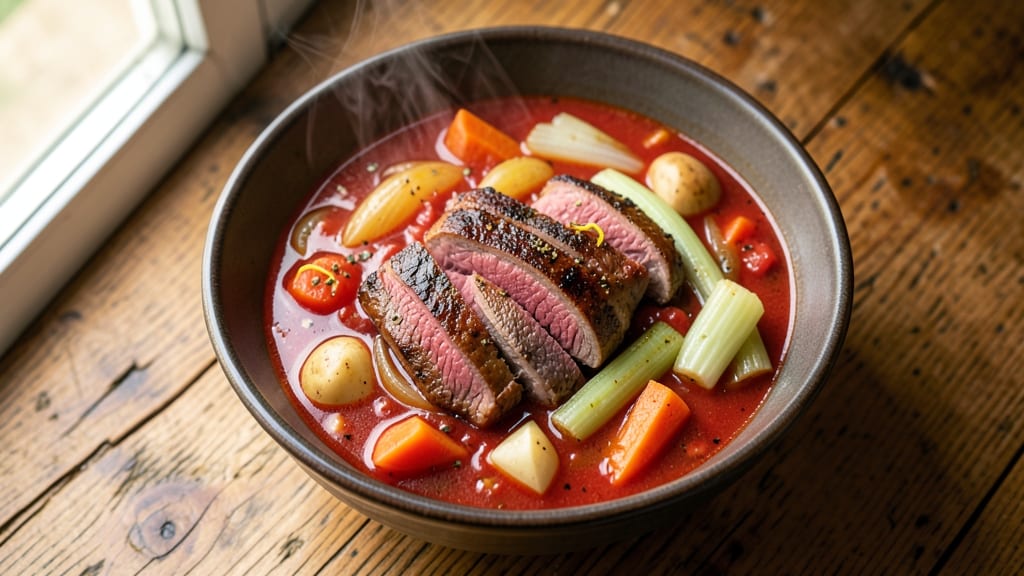
A beef vegetable soup with tomato sauce transforms simple ingredients into a deeply satisfying meal that warms the soul and fills the kitchen with aromatic comfort.
The secret lies in slow-simmered beef that melts into tender perfection while absorbing the rich, tangy tomato sauce—where every spoonful delivers layers of savory depth and velvety texture.
This isn’t just soup; it’s a foolproof technique that balances hearty protein, vibrant vegetables, and a sauce so flavorful it elevates even the most basic pantry staples.
The foundation begins with beef that’s browned to a deep golden crust, locking in flavor before it simmers for hours, breaking down into tender strands. Meanwhile, the tomato sauce—built from crushed tomatoes, garlic, and herbs—reduces into a concentrated, slightly sweet base that ties everything together.
Celery crowns add a crisp, fresh contrast, while carrots and potatoes round out the meal with natural sweetness and heartiness.
What emerges from the pot is a restaurant-quality soup that’s rich yet balanced, with each bite offering a harmony of textures: tender beef, al dente vegetables, and a sauce that clings to every spoonful.
The aroma alone—warm, spiced, and tomato-infused—will have everyone gathered around the table, and the leftovers? Even better the next day, as flavors deepen with time.
Perfect for chilly evenings, meal prep, or feeding a crowd, this soup delivers satisfaction in every bowl. The method is straightforward but packed with professional techniques—like proper beef browning and sauce reduction—that ensure a result you’d pay for at a bistro.
Let’s get started on creating this hearty, comforting classic that’s as nourishing as it is delicious.
Ingredients for beef vegetable soup recipe with tomato sauce
Sixteen ingredients transform into a restaurant-quality beef vegetable soup with tomato sauce.
| Ingredient | Amount | Notes |
|---|---|---|
| Chuck Roast 🥩 | 2 lb | Trimmed of excess fat |
| Yellow Onion 🧅 | 1 whole | Diced, medium-sized |
| Carrots 🥕 | 4 medium | Peeled, cut into chunks |
| Celery Stalks 🧅 | 4 whole | Trimmed, cut into 1-inch pieces |
| Russet Potatoes 🥔 | 2 lb | Peeled, cut into 2-inch chunks |
| Crushed Tomatoes 🍅 | 2 cups | San Marzano preferred |
| Garlic Cloves 🧄 | 6 cloves | Minced, fresh preferred |
| Tomato Paste 🍅 | ½ cup | Smooth, not chunky |
| Beef Broth 💧 | 4 cups | Low-sodium preferred |
| Dried Thyme 🌿 | 1 tsp | Or 1 tbsp fresh |
| Bay Leaves 🌿 | 2 whole | Fresh preferred |
| Olive Oil 🫒 | 2 tbsp | Extra-virgin for richness |
| Salt 🧂 | 1 ½ tsp | Diamond Crystal preferred |
| Black Pepper 🌶️ | ½ tsp | Freshly ground |
| Red Wine 🍷 | ½ cup | Dry, like Cabernet Sauvignon |
The chuck roast is non-negotiable for this soup—its marbled fat renders into rich flavor during the long simmer. Costco or Whole Foods typically carry high-quality chuck, but any well-marbled cut will work. Look for pieces with visible fat streaks, as this breaks down into succulent texture. Pre-trimmed roasts save time, but if buying whole, trim excess fat before browning. The celery crowns deserve special attention: select stalks with vibrant green tops, as they add both texture and freshness to the finished dish. For the tomatoes, San Marzano cans deliver the sweetest, most concentrated flavor—worth the investment for this recipe.
No red wine? Substitute with an extra 0.5 cup beef broth, though the acidity will differ slightly. Fresh thyme is ideal, but dried works at one-third the amount—just ensure it's labeled as culinary-grade. The tomato paste can be swapped for 1 cup whole crushed tomatoes if you prefer a chunkier texture. For the vegetables, baby carrots or frozen chopped carrots work in a pinch, though fresh yields the best texture. If you're short on time, pre-diced onions and celery from the grocery store's fresh produce section save prep time without sacrificing quality.
This soup tastes even better the next day as flavors meld. Store in an airtight container in the fridge for up to 5 days, or freeze for 3 months by portioning into meal-sized containers. For freezing, cool the soup completely first to prevent ice crystals. Reheat gently on the stove, adding a splash of broth if it thickens too much. The celery crowns will soften slightly but retain their freshness—add them back in during the final 5 minutes of reheating to preserve their crunch.
Why You'll Love This Recipe
- One-Pot Magic: I swear by this recipe when I’m too tired to wash a million dishes. Chuck roast and veggies simmer together—no extra pots, no fuss—while the tomato sauce ties everything into a rich, saucy hug. Honestly, the only cleanup is a single spoon.
- Tomato-Garlic Umami Bomb: That slow-cooked chuck roast? It practically melts into the tomato sauce, soaking up all the deep, savory flavors. The onions caramelize just enough to add sweetness, while the celery and carrots stay crisp—like a flavor party where everyone’s invited.
- Lunchbox Hero: Between us, this soup is my go-to for meal prep. The potatoes hold up perfectly when reheated, and the beef stays tender enough to cut with a fork. Pack it in jars, and you’ve got a hearty lunch that’ll make coworkers ask for seconds.
- Budget-Friendly Feast: A chuck roast stretches across multiple meals, and the veggies? They’re the kind you can grab on sale. I’ve fed four people for under $15, and the leftovers are even better the next day—especially with a sprinkle of fresh parsley. (Yes, even on a Tuesday night.)
Step-by-step instructions for beef vegetable soup with tomato sauce
This method builds rich, layered flavors through precise timing and technique.
Sear the Chuck Roast for Deep Flavor
Pat the chuck roast dry with paper towels and season generously with 1.5 teaspoons salt and 0.5 teaspoon black pepper. Heat 2 tablespoons olive oil in a large Dutch oven over medium-high heat until shimmering. Add the roast and sear on all sides for 6-8 minutes total, turning occasionally, until deeply browned. This caramelization forms the flavor base for your soup.
Remove the roast and set aside. Here's the thing—don't rinse the browned bits from the pot. Those fond particles will dissolve into the broth, creating unmatched depth of flavor. If you're concerned about fat, carefully remove any excess with a paper towel after searing.
Build the Vegetable Base with Aromatics
In the same Dutch oven, add 1 whole diced yellow onion, 4 medium carrots cut into chunks, and 4 whole celery stalks cut into 1-inch pieces. Cook over medium heat for 8-10 minutes, stirring occasionally, until the vegetables soften slightly and release their natural juices. This process, called sweating, develops their flavors without browning.
Add 6 minced garlic cloves and cook for 30 seconds until fragrant—don't let it brown or it'll turn bitter. Stir in 0.5 cup tomato paste and cook for another 2 minutes until it darkens slightly. This creates a rich, concentrated base that will blend beautifully with the tomatoes and wine later.
Develop the Tomato-Wine Sauce
Pour in 0.5 cup red wine and scrape up any browned bits from the bottom of the pot with a wooden spoon. This deglazing step captures all the caramelized flavors. Simmer for 3-4 minutes until the wine reduces by half and the mixture thickens slightly.
Add 2 cups crushed tomatoes and 4 cups beef broth, scraping the bottom again to incorporate any remaining fond. Bring to a gentle boil, then reduce heat to medium-low and let it simmer for 10 minutes to meld the flavors. The soup should smell rich and complex—this is where the magic happens before adding the potatoes.
Cook the Potatoes and Season
Add 2 lb russet potatoes cut into 2-inch chunks to the simmering liquid. Stir gently to distribute them evenly. Add 1 teaspoon dried thyme and 2 whole bay leaves, then cover partially and simmer for 15-20 minutes until the potatoes are tender when pierced with a fork. The potatoes should absorb some of the broth but still maintain their shape.
Return the chuck roast to the pot, along with any accumulated juices. Add 1.5 teaspoons salt and 0.5 teaspoon black pepper, then cover completely and simmer for 1 hour on low heat. This long cook time ensures the beef becomes fork-tender while maintaining its texture.
Finish and Adjust for Perfect Balance
Remove the chuck roast and let it rest for 10 minutes before shredding it with two forks directly in the pot. Discard the bay leaves. Taste the soup and adjust seasoning if needed—this is where you can really refine the flavor. The soup should be rich but not overpowering, with a balance of tomato acidity, wine depth, and vegetable sweetness.
Serve immediately with crusty bread to soak up the flavorful broth. The perfect bowl should have tender beef, al dente vegetables, and a velvety tomato-wine sauce that coats every spoonful. The celery will maintain its slight crunch, providing textural contrast to the creamy broth.
Pro Tips For Making Beef Vegetable Soup Recipe With Tomato Sauce
- Sear the Chuck First: Skip the slow start—get that roast blistering brown in a hot pot before adding liquid. I used to add everything at once, and the beef stayed bland. Two minutes per side in oil makes the difference between "meh" and "wow."
- Cut Potatoes Last: Add russets whole until the last 15 minutes, then halve or quarter them. They’ll hold shape longer and absorb flavor better than if you toss them in chopped. (Yes, even if they look awkward at first.)
- Salt the Water Hard: The broth needs at least 1 teaspoon of salt per quart of water upfront—don’t wait for the veggies. I learned this after tasting soup where the beef was rich but the broth tasted flat. Trust me, it’s worth the extra pinch.
- Deglaze with Tomato Paste: After browning the onions and celery, sprinkle 1 tablespoon of tomato paste into the pot and stir like you’re mad. Let it cook 2 minutes before adding liquid—this builds depth faster than just dumping sauce later. (No, it won’t taste like ketchup.)
Essential equipment for beef vegetable soup recipe with tomato sauce
Dutch Oven
A 6-8 quart Dutch oven is my go-to for this soup—it's heavy enough to distribute heat evenly and deep enough to accommodate all ingredients without boiling over. I recommend the Le Creuset Signature or Lodge Cast Iron models for their durability and heat retention.
Cast iron also adds a subtle iron note to the broth over time, enhancing the depth of flavor. If you don't have one, a heavy-bottomed stockpot works in a pinch. 🔥
Knife Set
Invest in a sharp chef's knife (8-10 inches) for chopping onions, celery, and carrots efficiently. I use a Wüsthof Ikon for its balanced weight and precision. A paring knife comes in handy for mincing garlic and peeling potatoes.
For shredding the beef, a fork works, but a slicing knife gives you more control if you prefer ribbons over chunks. Keep your knives sharp—they make prep faster and safer.
Wooden Spoon
A wooden spoon is essential for stirring the soup without scratching your Dutch oven. I prefer maple or hickory handles for their durability and heat resistance. Avoid metal utensils when scraping fond from the pot—wood is gentle on the pan and won't react with acidic ingredients like tomatoes.
A long-handled spoon also helps prevent burns when stirring hot liquids. 🌟
Measuring Tools
Precision matters in this recipe, so use a stainless steel measuring cups and spoons set for accurate liquid and dry ingredient measurements. I recommend OXO Good Grips for their ergonomic design and readability. A kitchen scale isn't mandatory but helps when measuring the chuck roast for consistency.
For the tomato paste, a small rubber spatula ensures you scrape every last bit from the jar into the pot.
Slow Cooker Option
For hands-off cooking, a 6-quart slow cooker works beautifully. I use my Hamilton Beach Programmable on low for 8 hours or high for 4 hours. Brown the beef and vegetables in a skillet first, then transfer everything to the slow cooker.
The slow cooker maintains gentle heat, allowing the beef to tenderize without drying out. This method is perfect for busy weeknights or meal prep. ⏰
Mise en Place
Before you start cooking, gather all your ingredients and prep them in advance—a technique called mise en place. Use small bowls or ramekins to portion out spices, herbs, and liquids like olive oil and red wine.
I keep a timer set for each prep step to stay organized. This method prevents overcrowding in your pot and ensures everything cooks evenly. Trust me, it saves time and stress during the actual cooking process. 💡
Nutrition facts
Frequently asked questions
Can I substitute the red wine with something else?
Yes! If you don't have red wine, use 0.5 cup beef broth or apple cider vinegar (2 tbsp) mixed with 0.3 cup broth for acidity. The wine adds depth, but these substitutes prevent a flat flavor. For a non-alcoholic option, try grape juice—it mimics some of the sweetness and acidity.
How do I make this soup thicker or thinner?
For a thicker soup, simmer uncovered for 5-10 minutes to reduce the liquid. If it's too thick, add ½ cup hot beef broth at a time until reaching your desired consistency. Stir well and taste—remember, flavors deepen as it cools. For a creamier texture, stir in 2 tbsp heavy cream or mashed potato at the end.
Can I use ground beef instead of chuck roast?
Brown 1 lb ground beef with the onions and celery, breaking it into small pieces. Since ground beef cooks faster, add it with the potatoes and simmer for 20-25 minutes instead of 1 hour. The texture will be different but still delicious—just skip the shredding step. For extra richness, add 1 tbsp tomato paste to the ground beef while browning.
What vegetables can I swap in or out?
This soup is flexible! Swap carrots for parsnips or butternut squash (add with potatoes), or use green beans or zucchini for freshness—add them in the last 10 minutes to keep them crisp. For a heartier version, add 1 cup diced sweet potatoes or 1 cup chopped kale (add with potatoes). Just adjust cooking times accordingly.
Why does my tomato sauce taste too acidic?
Tomato sauce can taste sharp if the tomatoes are too acidic or the wine/broth wasn't reduced enough. Balance it by adding 1 tsp sugar or ½ tsp honey to sweeten, or stir in 1 tbsp tomato paste to deepen the flavor. If it's still too tangy, a pinch of baking soda (⅛ tsp max!) can neutralize acidity—but use sparingly. Let the soup rest 10 minutes before tasting again, as flavors mellow.