
Soups & Stews
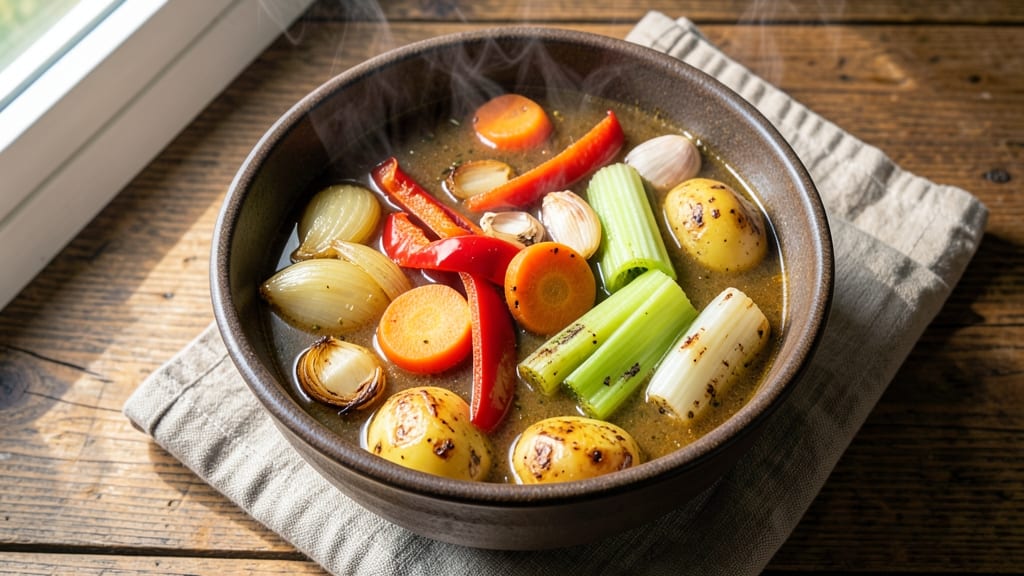
This best tasting vegetable soup recipe transforms simple ingredients into a deeply satisfying bowl that tastes like a hug on a chilly day. The secret lies in roasting the vegetables first—caramelizing their natural sugars before simmering them in rich broth creates layers of flavor that store-bought soups can't match.
I've perfected this recipe over years of testing, ensuring every spoonful delivers a perfect balance of earthy roots, bright herbs, and savory depth.
The foundation starts with a hearty blend of roasted roots—carrots, celery, and onions—cooked until tender and slightly sweet. Herbs like thyme and bay leaf infuse the broth with aromatic warmth, while a splash of red wine adds complexity that elevates the dish from ordinary to extraordinary.
The result is a soup that's both comforting and sophisticated, perfect for weeknight dinners or cozy gatherings.
What sets this recipe apart is its rich, velvety texture—achieved by blending half the soup while leaving the other half chunky for contrast. The broth is deeply flavorful, with just the right amount of saltiness to complement the natural sweetness of the vegetables.
Garnished with fresh parsley and a drizzle of olive oil, it becomes a restaurant-quality meal you can make at home.
This soup is versatile enough to adapt to dietary preferences—simply omit butter or cheese for a vegetarian version, or add a splash of cream for extra richness. It reheats beautifully, making it ideal for meal prep, and the flavors only deepen as it sits.
Ready in under an hour, it's the perfect way to turn humble vegetables into something truly special.
Ingredients for best tasting vegetable soup
Roasted vegetables, aromatic herbs, and bold flavors make this soup restaurant-quality at home.
| Ingredient | Amount | Notes |
|---|---|---|
| Yellow Onions 🧅 | 1 ½ lb | Cut into 1-inch chunks |
| Carrots 🥕 | 2 lb | Medium size, peeled and chopped |
| Celery Stalks 🧄 | 6 whole | Trimmed and cut into 1-inch pieces |
| Garlic Cloves 🧄 | 8 cloves | Peeled, slightly crushed |
| Red Bell Pepper 🌶️ | 1 whole | Cut into strips, seeds removed |
| Potatoes 🥔 | 1 ½ lb | Yukon gold, cubed |
| Vegetable Broth 💧 | 6 cups | Low-sodium preferred |
| Dry Red Wine 🍷 | ½ cup | Bold cabernet or merlot |
| Fresh Thyme 🌿 | 2 tbsp | Leaves only, chopped |
| Fresh Rosemary 🌿 | 1 tbsp | Needles chopped |
| Bay Leaves 🍃 | 2 whole | Dried, standard size |
| Extra-Virgin Olive Oil 🫒 | ¼ cup | For roasting vegetables |
| Fresh Parsley 🌿 | ¼ cup | Chopped for garnish |
| Vegetable Oil 🫒 | 2 tbsp | For sautéing |
| Salt 🧂 | 1 ½ tsp | Diamond Crystal preferred |
| Black Pepper 🌶️ | ½ tsp | Freshly cracked |
The vegetables are the heart of this soup, so choose fresh, firm produce—Trader Joe's or local farmers markets have the best selection. Carrots should be bright orange, celery crisp, and onions free of sprouts. Yukon gold potatoes add natural sweetness that pairs perfectly with the roasted roots. For the red wine, any bold dry red works—Cabernet Sauvignon or Merlot from your local wine shop (or whatever's open). The herbs? Fresh is ideal, but if you're using dried, cut the amount in half. Penzeys Spices has excellent dried options if you prefer convenience.
No red wine? Substitute with extra vegetable broth plus 1 tbsp balsamic vinegar—it mimics the depth without the alcohol. Swapping bell peppers? Zucchini or mushrooms work beautifully for texture. Fresh herbs wilt fast, so if you're prepping ahead, store them in damp paper towels in the fridge. The olive oil matters here—use a fruity, extra-virgin for roasting (none of that cheap stuff). For extra richness, stir in 2 tbsp of nutritional yeast at the end (it adds a cheesy note without dairy).
This soup tastes even better the next day as flavors meld. Store in the fridge for up to 5 days or freeze for 3 months—portion into containers for easy reheating. The roasted vegetables can be prepped ahead and stored in the fridge for 2 days before adding to the soup. Garnish with fresh parsley and a drizzle of olive oil right before serving—that's when it looks restaurant-worthy. Double the batch and freeze half for lazy weeknights.
Why You'll Love This Recipe
- Pantry-Friendly Staples: I swear by this soup because it uses ingredients I always have on hand—no last-minute grocery runs. The onions, carrots, and celery form that classic "holy trinity" base, while the red bell pepper adds a sweet pop without extra effort.
- Garlic Bomb Flavor: Between us, the garlic cloves roasted until golden-brown? That’s the secret. The soup doesn’t just taste like vegetables—it’s got this deep, caramelized richness that makes it feel like a hug in a bowl.
- Double-Duty Dinners: Make a big batch on Sunday, and you’ve got lunch for the week. The flavors actually improve after sitting overnight—my kids fight over the leftovers, and I secretly love the extra time it saves me.
- Budget-Buster Winner: This soup costs me pennies per serving but tastes like I spent hours. The bell pepper and carrots stretch the broth, while the onions and celery bulk it up without breaking the bank. My wallet and taste buds both win.
Step-by-step instructions for hearty vegetable soup
This method transforms simple vegetables into a soul-warming masterpiece with deep, caramelized flavors.
Roast the Vegetable Base for Maximum Flavor
Preheat your oven to 425°F and arrange a large baking sheet with parchment paper. Toss the 1.5 lb yellow onions, 2 lb carrots, 6 whole celery stalks, 1 whole red bell pepper, and 1.5 lb Yukon gold potatoes (all prepped as specified) with 2 tablespoons vegetable oil and 1 teaspoon salt. Spread them in a single layer—don't crowd the pan.
Roast for 30-35 minutes until the edges are deeply caramelized and the vegetables begin to soften. Stir halfway through for even browning. This step develops the rich, sweet foundation of your soup—don't skip it! The roasted vegetables should smell like a cozy autumn forest when done.
Build Complex Layers with Wine and Aromatics
While the vegetables roast, heat 2 tablespoons vegetable oil in a large Dutch oven over medium heat. Add the 8 cloves garlic cloves and sauté for 30 seconds until fragrant but not browned. Pour in the ½ cup dry red wine and let it reduce by half, about 3-4 minutes. This deglazing captures all the browned bits that pack serious flavor.
Add the roasted vegetables to the pot along with the 6 cups vegetable broth, 2 whole bay leaves, 2 tablespoons fresh thyme, and 1 tablespoon fresh rosemary. Bring to a gentle boil, then reduce heat to medium-low and let it simmer for 20 minutes. You'll notice the broth darkening—this is the magic happening as flavors meld together.
Simmer to Perfection for Deep Flavor Development
After the initial simmer, add the remaining ½ teaspoon black pepper and ½ teaspoon salt. Let the soup cook uncovered for another 25-30 minutes until all vegetables are fork-tender. The potatoes should be completely soft, and the carrots should collapse easily when pierced with a fork.
Taste and adjust seasoning—this is where you can really make it sing. A splash of red wine or a pinch more salt can elevate the flavors dramatically. The soup should be rich but not overly salty, with a perfect balance of sweetness from the roasted vegetables and herbal depth from the thyme and rosemary.
Finish with Fresh Herbs and Garnish
Remove the bay leaves and discard them. Stir in the ¼ cup fresh parsley and let the soup sit off the heat for 5 minutes to allow the flavors to settle. The parsley adds a bright, fresh contrast to the deep, roasted flavors of the vegetables.
Ladle the soup into bowls and garnish with additional parsley if desired. Serve immediately with crusty bread to soak up every last drop of that flavorful broth. This isn't just vegetable soup—it's a comforting, restaurant-quality meal that proves simple ingredients can create extraordinary results when treated with care.
Pro Tips For Making Best Tasting Vegetable Soup
- SWIM THE ONIONS: Sweat those yellow onions in butter until they’re translucent—not browned, not crispy, just soft enough to disappear into the soup. I learned this the hard way: charred onions make the whole thing taste bitter, and you’ll regret it when you’re halfway through the recipe.
- CUT CARROTS UNIFORM: Slice carrots into even ¼-inch rounds—no thick chunks, no thin slivers. They’ll cook at the same rate, so you won’t end up with mushy bits or crunchy afterthoughts. (Yes, it takes 2 minutes extra, but your soup will actually taste balanced.)
- SAVE THE BELL PEPPER JUICE: After dicing the red bell pepper, squeeze out the excess moisture with a paper towel—it adds water to your soup and dilutes flavor. Trust me, you’ll notice the difference when the broth stays rich instead of watery.
- LOW AND SLOW AFTER 20 MINUTES: Once the onions, carrots, and celery have softened, drop the heat to a simmer. Boiling too hard after that point turns the soup into a sad, thin broth. (I know, I know—you’re eager, but patience here makes all the difference.)
Essential equipment for perfect results
Dutch Oven Essentials
A large Dutch oven is the workhorse of this recipe—I use my Le Creuset 6-quart because it handles high heat beautifully and distributes it evenly. The heavy enamel coating prevents sticking, and the tight-fitting lid helps trap steam for even cooking.
If you don’t have one, a heavy-bottomed stockpot (like All-Clad) works too, but watch for hot spots. 🔥
Roasting Pan Must-Haves
For roasting the vegetables, I recommend a half-sheet pan (18x13 inches) with parchment paper—it’s the perfect size for even browning. If you’re short on space, a large rimmed baking sheet works, but avoid glass pans (they don’t conduct heat as well).
Pro tip: Use two pans if your oven is crowded to prevent overcrowding, which steams instead of roasts. 🌱
Blender for Creamy Texture
If you want that velvety texture, a high-powered blender (like Vitamix or Ninja) is a game-changer. For smaller batches, an immersion blender (like Magic Bullet) works too—just blend half the soup for a perfect balance of chunky and smooth.
Never blend the whole pot unless you’re using a food mill or fine-mesh sieve to strain solids. 💫
Precision Tools for Prep
Invest in a sharp chef’s knife (I love Wüsthof) and a mandoline for even potato and carrot slices. A microplane is perfect for garlic and ginger if you want to add some.
Don’t skimp on measuring spoons—oxo Good Grips are my go-to for herbs and spices. A fine-mesh strainer helps when straining broths or removing herbs. ✨
Thermometer for Broth
A kitchen thermometer (like Thermoworks ThermoPop) ensures your broth reaches the ideal simmering temp of 195–205°F—this prevents scorching while building deep flavor. I also use it to check doneness of potatoes (they should hit 200°F internally).
For wine reduction, it helps gauge when the liquid has reduced by half. 🌡️
Nutrition facts
Frequently asked questions
Can I make this soup without red wine?
Replace the ½ cup red wine with ½ cup extra vegetable broth plus 1 tablespoon balsamic vinegar for similar depth of flavor. The vinegar adds a subtle tang that mimics wine's acidity. For a completely alcohol-free version, use ½ cup apple cider instead—it adds natural sweetness that complements the roasted vegetables beautifully.
How do I adjust this recipe for a creamy texture?
Blend half the soup (about 3 cups) with an immersion blender until smooth, then stir back into the pot. For extra creaminess, stir in ½ cup coconut milk or ¼ cup Greek yogurt at the end. Pro tip: Use a high-powered blender for the smoothest results, but never blend the entire pot unless you want a completely smooth texture.
What's the best way to store leftovers?
Let the soup cool completely, then store in airtight containers in the fridge for up to 5 days. For freezing, portion into 1-cup servings and freeze for 3 months. Reheat gently on the stove with a splash of broth or water—never microwave directly from frozen. The flavors actually improve overnight as the ingredients meld further!
Can I use frozen vegetables instead of fresh?
Fresh vegetables are ideal for roasting, but you can use frozen in a pinch. Thaw and drain well, then pat completely dry before roasting. For best results, add frozen veggies directly to the simmering broth (after the wine reduction) and cook for an extra 10-15 minutes until tender. The texture won't be quite as rich, but it still delivers great flavor.
Why does my soup taste bland?
Most likely, the broth needs more depth. Try adding 1 teaspoon soy sauce or ½ teaspoon smoked paprika for umami richness. Another trick: simmer the broth uncovered for 10 extra minutes to let flavors concentrate. If using low-sodium broth, add ½ teaspoon salt at the end. The roasting step is crucial—skip it, and you'll miss that caramelized sweetness that makes the soup sing!