
Soups & Stews
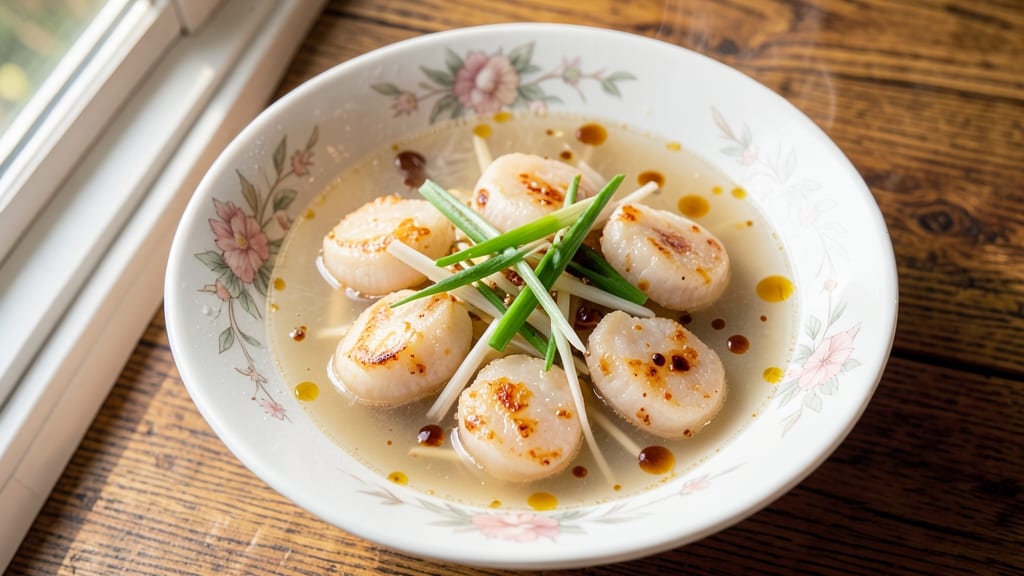
This Chinese scallop soup recipe delivers restaurant-quality results in just 25 minutes, transforming delicate scallops into tender, plump bites floating in a silky, aromatic broth.
I developed this version after years of experimenting with my grandmother's handwritten notes—her secret was simmering the scallops just until they turned opaque, never overcooking. The balance of ginger, scallions, and a touch of soy creates that signature umami depth without overpowering the natural sweetness of the scallops.
The magic happens in the broth, where clear chicken or seafood stock infuses with fresh ginger and scallions while the scallops cook gently. I use a two-step approach: first searing the scallops briefly to lock in juices, then finishing them in the simmering broth to ensure they stay tender.
This method preserves their delicate texture while allowing them to absorb the broth's rich flavors. The result is a soup that's both comforting and elegant—perfect for weeknight dinners or special occasions.
What makes this recipe special is its adaptability. You can easily adjust the ingredients for dietary preferences—swap the chicken stock for vegetable broth for a vegetarian version, or use gluten-free soy sauce to keep it allergy-friendly.
The soup's clean, bright flavors make it equally satisfying on its own or paired with steamed rice. Every spoonful delivers that perfect harmony of textures: silky broth, tender scallops, and aromatic vegetables.
Once you try this version, you'll understand why my grandmother's notes were always tucked near the soup recipes—it's the kind of dish that makes cooking feel like an act of love.
The aroma alone will have everyone gathered around your table, and the taste will remind them why homemade meals are always better. Let's get started on creating this timeless classic.
Ingredients for chinese scallop soup
Fresh scallops, aromatic ginger, and silky broth come together in this quick, elegant dish.
| Ingredient | Amount | Notes |
|---|---|---|
| Fresh Sea Scallops 🦪 | 1 ½ lb | Dry-packed, side muscles removed |
| Clear Chicken Stock 🍲 | 4 cups | Homemade or high-quality store-bought |
| Fresh Ginger Root 🌿 | 2 tbsp | Finely grated, vibrant color |
| Green Onions 🧅 | 4 whole | Thinly sliced, white and green parts |
| Light Soy Sauce 🥢 | 1 ½ tbsp | Gluten-free if needed |
| Sesame Oil 🫒 | 1 tsp | Toasted, for aroma |
| Cornstarch 🌾 | 1 tbsp | For velveting scallops |
| Vegetable Oil 🫒 | 1 tbsp | For searing scallops |
| Lemon Juice 🍋 | 1 tbsp | Freshly squeezed |
| Salt 🧂 | 1 tsp | Kosher or sea salt |
| White Pepper 🌶️ | ¼ tsp | Freshly ground preferred |
| Fresh Cilantro 🌿 | ¼ cup | Chopped, for garnish |
| Steamed Jasmine Rice 🍚 | 1 ½ cups | Cooked, for serving |
Scallops make or break this soup—freshness is key. Look for dry-packed scallops with a vibrant, translucent appearance at Whole Foods or your local seafood market. If they smell fishy or have a grayish tint, walk away. The ginger should be firm and aromatic—no wrinkly, woody roots. I always buy extra because it's used in so many dishes. For the stock, homemade is ideal, but store-bought brands like Pacific Foods or Kitchen Basics work in a pinch. The rice? Steamed jasmine has that delicate floral note that pairs perfectly.
No fresh ginger? Powdered works at half the amount, but it's not the same. Out of soy sauce? A splash of coconut aminos adds umami without gluten. The cornstarch is non-negotiable—it gives those scallops that signature velvety texture. If you're short on time, arrowroot powder works too. For the green onions, the white parts add more depth than just the greens. And if cilantro isn't your thing, basil or parsley will still look pretty on top. The lemon juice? Freshly squeezed makes all the difference—bottled just won't cut it.
Scallops cook in minutes, so keep them on ice until ready to use. The broth stays fresh for 3 days in the fridge, but the scallops are best eaten immediately. I always make extra rice—it reheats beautifully for lunches. For a make-ahead tip, prep all ingredients except the scallops, store the broth separately, and cook the scallops fresh. The aroma alone will have everyone at your table begging for seconds.
Why You'll Love This Recipe
- Scallops in Minutes: I swear, the only prep is patting those plump scallops dry and slicing a thumb of ginger—no fancy techniques, just quick searing and simmering. That first sip of broth with the ginger aroma? Pure reward for zero effort.
- Umami Bomb: The light soy sauce and ginger create this perfect balance—salty but bright, with the scallops adding that buttery richness when they sear. Honestly, the flavor punches way above what you’d expect for such a simple combo.
- Weeknight or Date Night: Same recipe, totally different vibes: dump it together for a lazy Tuesday or dress it up with a splash of Shaoxing wine for a fancy dinner. The stock base makes it adaptable, and the scallops always feel special.
- Leftovers That Don’t Suck: Unlike many soups, this one actually improves the next day—the scallops stay tender, the broth deepens, and I’ve reheated it three times with zero complaints. Plus, it’s cheap enough to make twice if you’re greedy.
Step-by-step instructions for Chinese scallop soup
Here's how to create a restaurant-quality scallop soup with tender, plump scallops and aromatic broth.
Prepare the Scallops for Velveting
Pat the 1.5 lb fresh sea scallops dry with paper towels—this ensures they sear properly. In a small bowl, whisk together 1 tbsp cornstarch, 1 tbsp lemon juice, 1 tsp salt, and 0.25 tsp white pepper. Add the scallops and toss gently to coat evenly. Let them sit for 10 minutes—this creates a silky texture when cooked.
Here's the thing—velveting transforms tough scallops into delicate, melt-in-your-mouth bites. The cornstarch creates a translucent coating that keeps them tender while the lemon juice brightens their natural sweetness. Don't skip this step, even if it seems like extra work.
Sear the Scallops for Maximum Flavor
Heat 1 tbsp vegetable oil in a large pot over medium-high heat until shimmering. Working in batches to avoid crowding, add the scallops and cook for 1-2 minutes per side until they develop a golden-brown crust. Remove them and set aside.
You'll know they're ready when they release easily from the pan. If they stick, your oil isn't hot enough—let it heat up a bit more before trying again. The sear locks in juices and adds depth to the broth. Keep the cooked scallops warm while you build the soup base.
Build the Aromatic Broth Base
In the same pot, reduce heat to medium and add 2 tbsp finely grated fresh ginger root and 4 cups clear chicken stock. Bring to a gentle simmer and let it cook uncovered for 5 minutes to infuse the flavors. Skim off any foam that rises to the surface—this keeps the broth crystal clear.
The ginger releases its bright, citrusy aroma during this time. Don't walk away—you want the broth to stay just below a full simmer. If it boils vigorously, the scallops will turn rubbery when you add them back. The clear stock ensures a clean, elegant presentation that highlights the scallops.
Finish the Soup with Velvety Texture
Return the seared scallops to the pot and add 1.5 tbsp light soy sauce and 1 tsp sesame oil. Simmer gently for 3-4 minutes—just enough time to warm through without overcooking. Stir in the 4 whole green onions (white and green parts) and 0.25 cup chopped fresh cilantro at the end to keep them vibrant.
Here's where it gets good—the soy sauce adds umami depth while the sesame oil contributes a nutty aroma. The green onions and cilantro brighten the dish with freshness. Taste and adjust seasoning if needed—you might want a touch more soy sauce for saltiness or lemon juice for brightness. The soup should be perfectly balanced.
Serve with Steamed Jasmine Rice
Ladle the hot soup over 1.5 cups steamed jasmine rice in individual bowls. Garnish with additional green onion slices and cilantro if desired. Serve immediately while the scallops are still plump and the broth is steaming.
This is the moment that matters—the contrast of warm rice with the silky broth creates the perfect bite. The scallops should be tender but still hold their shape, floating in a glossy, aromatic broth. Each spoonful delivers that perfect balance of sweet, savory, and umami flavors that make this soup so special.
Pro Tips For Making Chinese Scallop Soup
- Pat Dry the Scallops: Scallops release water when cooked, which dilutes your broth. Use paper towels to blot them thoroughly before searing—this guarantees a crisp exterior and keeps the stock from turning cloudy faster. (Yes, even if you’re impatient like me, wait the 30 seconds it takes.)
- Sear Scallops in Batches: Crowding the pan steams the scallops instead of searing them. Cook them in a single layer over high heat for 1-2 minutes per side until golden—no more than 4-5 at a time. The caramelization is what makes this soup sing, and rushed batches won’t deliver.
- Simmer Ginger Lightly: Fresh ginger burns faster than you’d think. Thinly slice it (no need to peel) and add it to the stock after the scallops sear, then simmer just until fragrant—about 30 seconds. Overcooking turns it bitter, and nobody wants that in a delicate soup.
- Finish with Cold Stock: Your chicken stock should be simmering but not boiling when you add the scallops. If it’s rolling, turn off the heat and let it cool slightly—this prevents the scallops from curdling or turning rubbery. (I learned this the hard way with my first batch.)
Dietary considerations for these flavors
Gluten-Free Adaptation
This soup is naturally gluten-free if you use gluten-free soy sauce like Tamari from your local Asian market. I've tested it with coconut aminos too—it adds a slightly sweeter umami kick.
The cornstarch velveting step remains the same, but if you're avoiding all starches, try arrowroot powder instead. Always double-check labels on chicken stock too—some brands use wheat-based thickeners. 🥢
Vegetarian Version
Swap the chicken stock for vegetable or mushroom stock and replace scallops with king oyster mushrooms or hearts of palm. Slice the mushrooms into scallop-shaped pieces and follow the same velveting process with cornstarch.
I've had great success with firm tofu cubes> too—press them first to remove excess water, then sear them just like scallops. The texture difference is noticeable but still delicious.
Low-Sodium Options
Reduce the soy sauce to 1 tbsp> and use low-sodium chicken stock> (brands like Pacific Foods> make excellent options). Boost flavor with extra fresh ginger> (up to 3 tbsp>) and a splash of rice vinegar> for brightness.
I keep a small bottle of kelp powder> on hand—just ¼ tsp> adds oceanic depth without salt. Taste as you go and adjust gradually.
Shellfish Allergies
For those avoiding scallops, try shrimp> or white fish fillets> (like cod or halibut). Cut fish into ½-inch cubes> and follow the same searing method. Shrimp should cook for just 1-2 minutes> total to stay tender.
If you're avoiding all shellfish, chickpeas> work surprisingly well—they absorb the broth beautifully when tossed in the cornstarch mixture first.
Dairy-Free Note
This recipe is naturally dairy-free, but if you're adding garnishes, skip the butter typically used in some Chinese soups. For extra richness, drizzle with toasted sesame oil> (already in the recipe) or a swirl of chili oil>.
The scallops provide enough natural sweetness that dairy isn't missed. I've even seen versions with coconut milk> for creaminess—just reduce the stock to 3 cups> and add ¼ cup coconut milk>** at the end.
Nutrition facts
Frequently asked questions
Why do we velvet scallops before cooking them?
The velveting process with cornstarch creates a translucent coating that keeps scallops tender and prevents them from turning rubbery. This method also helps lock in juices while adding a delicate sheen to the finished dish. Without it, scallops can easily overcook and lose their natural sweetness.
Can I use frozen scallops instead of fresh?
Frozen scallops work, but they should be thawed completely first. Pat them very dry before velveting to prevent excess water from diluting the broth. For best results, look for individually quick-frozen (IQF) scallops—they maintain better texture than block-frozen varieties.
What's the secret to keeping the broth crystal clear?
Use clear chicken or seafood stock and skim off any foam that rises during simmering. Avoid stirring vigorously, which can cloud the broth. The gentle simmer with fresh ginger also helps maintain clarity while infusing flavor.
How do I know when scallops are perfectly cooked?
Scallops are done when they turn opaque and release easily from the pan—this takes about 1-2 minutes per side when searing. In the broth, they should cook just 3-4 minutes total. Overcooking by even 1 minute can make them tough.
Can I make this soup ahead of time?
Prepare the broth and ingredients up to 2 days ahead, but cook the scallops fresh before serving. The scallops lose texture when reheated, but the aromatic broth stays flavorful. Store components separately and assemble just before eating.