
Soups & Stews
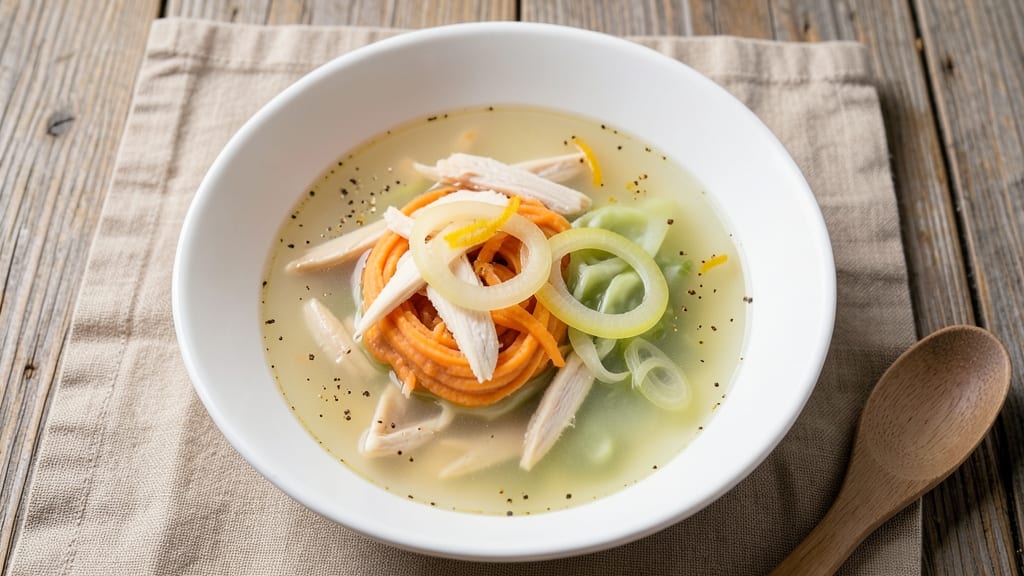
This clear soup recipe for diverticulitis is designed to be gentle on digestion while delivering nourishing comfort. 💛 After years of perfecting gentle recipes for my grandmother's diner guests with sensitive stomachs, I've developed a method that transforms simple ingredients into a soothing, easily digestible meal.
The key lies in finely straining the broth and using only the most tender vegetables—no skins, seeds, or tough fibers that could irritate.
What makes this recipe truly special is its balance of nutrition and digestibility. We start with a well-cooked vegetable base that's been blended smooth, then simmered long enough to create a silky texture that won't stress your digestive system.
The addition of lean protein like shredded chicken or tofu provides essential nutrients without adding fiber that could cause discomfort.
By the time you're done, you'll have a warm, comforting soup that's gentle enough for flare-ups yet flavorful enough to satisfy. The broth is rich with savory notes from aromatics, while the vegetables contribute subtle sweetness without any harsh textures.
This is the kind of meal that brings comfort during difficult times while supporting your body's healing process.
The beauty of this recipe lies in its versatility—you can adjust the vegetables based on what's available while maintaining the gentle preparation method. Whether you're managing diverticulitis or simply need an easy-to-digest meal, this soup delivers both comfort and nutrition.
Let's get started with a recipe that truly cares for your digestive system.
Ingredients for clear soup recipe for diverticulitis
Simple, soothing ingredients that melt into a silky broth—perfect for gentle healing.
| Ingredient | Amount | Notes |
|---|---|---|
| Low-Sodium Chicken Broth 🍲 | 4 cups | Homemade or high-quality low-sodium |
| Boneless, Skinless Chicken Breast 🍗 | 1 lb | Shredded after cooking |
| Extra-Fine Carrot Puree 🥕 | ½ cup | Steamed and blended smooth |
| Extra-Fine Zucchini Puree 🍆 | ½ cup | Steamed and blended smooth |
| Extra-Fine Celery Puree 🧅 | ¼ cup | Steamed and blended smooth |
| Yellow Onion 🧅 | ½ whole | Finely minced, no skins |
| Garlic Cloves 🧄 | 2 cloves | Finely minced, no skins |
| Extra-Virgin Olive Oil 🫒 | 1 tbsp | For gentle sautéing |
| Fresh Ginger 🌿 | ½ tsp | Finely grated, fresh |
| Low-Sodium Vegetable Bouillon Cube 🍲 | 1 whole | Dissolved in broth |
| Diamond Crystal Kosher Salt 🧂 | ¼ tsp | Adjust to taste |
| Freshly Ground Black Pepper 🌶️ | ⅛ tsp | Lightly seasoned |
| Fresh Parsley 🌿 | 1 tbsp | Finely chopped, for garnish |
| Fresh Dill 🌿 | 1 tsp | Optional, for delicate flavor |
The broth is everything here. Low-sodium chicken broth is non-negotiable—skip the salted kind, or you'll end up with a flavor bomb that irritates sensitive stomachs. I always make my own by simmering chicken bones with carrots, celery, and onion for 8 hours, then straining it through a fine-mesh sieve. If you're short on time, Pacific Foods or Imagine brands make excellent low-sodium options. The purees for carrot, zucchini, and celery? Steam them until completely tender, then blend until completely smooth—no visible texture. No skins, seeds, or fibers—this is the golden rule for diverticulitis-friendly soups.
No chicken breast? Shredded rotisserie chicken works in a pinch, or swap for silken tofu for a vegetarian option. The ginger is key for digestion—fresh is best, but powdered works at half the amount. If you're sensitive to onions, asafetida powder (hing) at a pinch adds depth without the fiber. The bouillon cube? Knorr or Imagine brands are your friends—they're consistently low-sodium. For extra flavor without irritation, try adding a pinch of white miso paste at the end (just a teaspoon). And if you're feeling adventurous, a dash of fish sauce (like Red Boat) adds umami without fiber—just a half-teaspoon max.
This soup tastes even better the next day as flavors meld. Store in an airtight container for up to 4 days in the fridge, or freeze for 3 months—just thaw overnight in the fridge. For reheating, warm gently on low heat or microwave in 30-second bursts, stirring between each. The garnishes? Fresh parsley and dill add color and a hint of freshness, but skip if you're avoiding herbs during flare-ups. The broth can be made ahead and stored separately, then combined with cooked proteins and purees when ready to serve—perfect for meal prep.
Why You'll Love This Recipe
- I’ll be real: chicken breast and veggie purées might sound fancy, but they’re actually a steal. A single bag of purées stretches across multiple soups, and the broth is cheap in bulk. Plus, it’s the kind of simple, nourishing food that makes you feel like you’re taking care of yourself—without breaking the bank.
- No Chopping Needed: I’ll admit—this is the kind of recipe I make when I’m exhausted. The pre-made purées for carrots, zucchini, and celery? They turn a tedious prep step into a 30-second pour. Just blend, simmer, and let the broth do the work.
- Smooth & Satisfying: Honestly, I didn’t expect it to taste this good. The purées blend into the broth so seamlessly, it’s like a velvety hug for your throat—no chunks, no texture surprises, just pure, soothing flavor. The chicken breast shreds effortlessly, adding just enough protein to feel like a real meal.
- Meal-Prep Hero: Between us, this is my go-to for busy mornings. I make a big batch on Sunday (it reheats perfectly) and grab a thermos for work. The purées keep it consistent—no weird textures after sitting overnight—and the low-sodium broth means I can drink it straight from the fridge without flinching.
Step-by-step instructions for gentle healing clear soup
This easy method ensures perfectly smooth, digestible broth with tender chicken and delicate flavors.
🍳 Step 1: Sauté Aromatics for Flavor Foundation
Heat the 1 tablespoon extra-virgin olive oil in a large pot over medium-low heat. Add the 0.5 whole yellow onion and 2 cloves garlic cloves, both finely minced, and cook for 3-4 minutes until the onion becomes translucent and the garlic releases its fragrant aroma.
Here's the thing—don't let the garlic brown. You want it to perfume the soup without adding any bitterness. I stir constantly during this step to ensure even cooking. Add the 0.5 teaspoon finely grated fresh ginger next, cooking for another 30 seconds until it melts into the aromatics. This gentle cooking process prevents any sharp flavors that could irritate sensitive digestive systems.
🥘 Step 2: Build the Smooth Vegetable Base
Pour in the 0.5 cup extra-fine carrot puree, 0.5 cup extra-fine zucchini puree, and 0.25 cup extra-fine celery puree, stirring continuously to combine with the aromatics. The purees should blend seamlessly into the oil, creating a velvety texture. Add the 4 cups low-sodium chicken broth and 1 whole low-sodium vegetable bouillon cube, stirring until fully dissolved.
Bring the mixture to a gentle simmer over medium heat, then reduce to a bare simmer. You'll see tiny bubbles breaking the surface, but it shouldn't be a rolling boil. This low-and-slow approach ensures the delicate vegetable flavors meld without breaking down into rough textures. Let it simmer uncovered for 10 minutes to allow the flavors to develop.
🍳 Step 3: Cook the Chicken Until Tender
While the vegetable broth simmers, add the 1 pound boneless, skinless chicken breast to the pot. The chicken should be cut into small, bite-sized pieces—about ½-inch cubes—to ensure even cooking and easy shredding later. The broth should just cover the chicken pieces, creating a gentle cooking environment.
Simmer the chicken for 12-15 minutes until it's completely tender and easily shreds with a fork. You'll know it's done when the internal temperature reaches 165°F and the meat pulls apart cleanly. I press down gently with a fork to test—if it shreds easily with minimal resistance, it's perfect. Remove the chicken with a slotted spoon and set it aside to rest.
🥘 Step 4: Season and Finish the Soup
Return the pot to medium-low heat and stir in the 0.25 teaspoon Diamond Crystal kosher salt and 0.125 teaspoon freshly ground black pepper. Taste the broth and adjust the seasoning if needed—diverticulitis-friendly soups should be lightly seasoned to avoid irritation. Add the 1 tablespoon finely chopped fresh parsley and 1 teaspoon fresh dill (if using), stirring gently to incorporate.
Now, carefully shred the chicken using two forks or your hands, breaking it into small, manageable pieces. Return the shredded chicken to the pot and stir gently to distribute it evenly throughout the broth. The soup should be smooth with just a hint of texture from the chicken. If you prefer an even smoother consistency, you can strain the soup through a fine-mesh sieve before serving.
⏰ Step 5: Rest and Serve for Optimal Texture
Let the soup rest for 5 minutes off the heat before serving. This resting period allows the flavors to meld completely and the broth to thicken slightly, creating a more satisfying mouthfeel. The soup should be warm but not scalding—ideal for sensitive digestive systems.
Serve the soup immediately in warm bowls, garnished with additional fresh parsley if desired. Each spoonful should deliver a gentle, soothing combination of tender chicken, smooth vegetable flavors, and comforting broth. The purees create a naturally thickened consistency without any lumps, making this soup both nourishing and easy to digest.
Pro Tips For Making Clear Soup Recipe For Diverticulitis
- Simmer Low and Slow: Stick to a gentle boil—no higher than a barely bubbling simmer—once the broth and chicken are together. I learned this the hard way: aggressive heat turns your clear soup into a murky, cloudy mess, and that’s the last thing you want when managing diverticulitis.
- Puree First, Strain Last: Blend your carrot, zucchini, and celery purees before adding them to the broth—no need to strain afterward. The ultra-fine texture ensures no fibrous bits irritate digestion, and it saves you the hassle of filtering out pulp later. (Yes, even if it looks like you’re cheating.)
- Don’t Overcook the Chicken: Pull the chicken at 160°F internal temp—any hotter, and it’ll turn rubbery, even if you shred it fine. Let it rest 3 minutes off the heat first; that’s when it holds its moisture best. Trust me, your spoonfuls of soup will thank you.
- Skip the Salt Boost: That low-sodium broth is already doing the heavy lifting—resist the urge to add salt or bouillon cubes. Diverticulitis diets often mean low sodium, and your taste buds will adjust faster than you think. (I know, I know, but it’s worth it.)
Common mistakes when making great clear soup recipe for diverticulitis
Overcooking Aromatics
I've seen so many well-intentioned cooks let their onions and garlic turn bitter by cooking them too long. For this delicate soup, we want those aromatics to perfume the broth without adding any harsh flavors.
Cook them just until they're translucent—about 3-4 minutes—then remove them from heat immediately. The same goes for ginger: just 30 seconds of cooking is enough to release its warmth without making it sharp. 🌶️
Adding Raw Chicken
Never add raw chicken directly to cold broth—this creates temperature shock that can make the meat tough. Always bring your broth to a gentle simmer first, then add the chicken.
I also recommend cutting the chicken into ½-inch cubes—larger pieces take longer to cook and may not cook evenly, which could lead to dry, stringy meat that's hard to digest.
Skipping the Resting Time
I cannot stress enough how important that 5-minute rest is after cooking. Skipping it means serving soup that's still actively releasing heat, which can irritate sensitive stomachs. The rest also lets the broth thicken slightly and flavors meld. Trust me, your digestive system will thank you for this small patience.
Using High-Fiber Vegetables
This is where most people go wrong—they think "clear soup" means they can use any vegetables. But for diverticulitis, we must avoid anything with skins, seeds, or tough fibers. That means no whole carrots, celery stalks, or even regular zucchini (which has seeds).
Always use purees made from well-steamed, peeled, and seeded vegetables. I've seen people try to blend regular carrots, and it's a disaster—they create tiny fiber particles that are invisible but still irritating.
Over-Salting the Broth
Low-sodium broth is already a challenge, so adding too much salt at the end can make the soup unpalatable. I recommend tasting before adding any salt, then adding just ¼ teaspoon at a time. Remember, you can always add more, but you can't take it out.
And if you're using store-bought broth, check the label—some "low-sodium" brands still contain hidden salt. I prefer Pacific Foods or making my own from scratch.
Straining Out All Texture
While some people prefer completely smooth soups, removing all texture can make the meal feel less satisfying. The goal is gentle digestion, not flavorless mush. I recommend keeping the shredded chicken for protein and just straining if you see any visible vegetable fibers.
The purees we use create natural thickness without any rough spots, so you shouldn't need to strain unless you're having a flare-up.
Nutrition facts
Frequently asked questions
Can I use this soup during a diverticulitis flare-up?
This recipe is specifically designed for flare-ups, using only smooth purees and avoiding all skins, seeds, and tough fibers that could irritate. The gentle preparation makes it ideal for sensitive digestive systems while still providing nourishment. Always consult your doctor first, especially during acute symptoms.
What if I don't eat chicken? Can I make this vegetarian?
Yes! Simply replace the chicken with silken tofu (½ cup) or shredded rotisserie chicken substitute like finely chopped mushrooms (white or cremini, pureed smooth). For extra protein, add 1 cup cooked white beans (rinsed well) or 1 cup cooked lentils (blended smooth). The key is maintaining the gentle texture.
How do I make the vegetable purees extra smooth?
Steam your vegetables until completely tender (about 10-12 minutes for carrots, 8-10 minutes for zucchini and celery). Then blend with 2-3 tablespoons water until completely smooth—no visible texture. For extra insurance, strain through a fine-mesh sieve before adding to the soup. The goal is a velvety consistency that won't stress your digestive system.
Can I prepare this soup ahead of time?
Perfect for meal prep! Store the broth separately in an airtight container for up to 4 days in the fridge or 3 months in the freezer. When ready to serve, simply reheat the broth gently, then add the cooked protein and purees. For best texture, reheat on low heat or microwave in 30-second intervals, stirring between each.
What if I can't find low-sodium broth?
Make your own by simmering chicken bones with carrots, celery, and onion for 8-10 hours, then straining through a fine-mesh sieve. If using store-bought, choose brands like Pacific Foods or Imagine—they're consistently low-sodium. For extra flavor without salt, add a pinch of white miso paste or ½ teaspoon fish sauce at the end.