
Soups & Stews
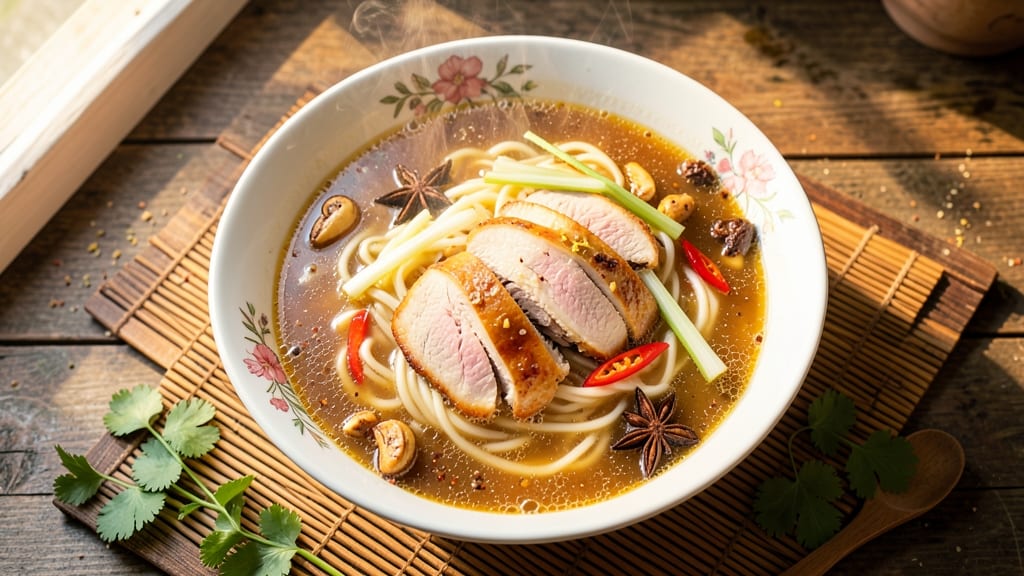
This Asian-style chicken noodle soup recipe transforms a simple bowl into a fragrant, comforting masterpiece with just 30 minutes of hands-on time. The secret lies in the aromatic broth—simmered with ginger, lemongrass, and star anise—creating layers of warmth that linger long after the first sip.
I developed this recipe after craving the perfect balance of savory, spicy, and umami flavors that define Asian noodle soups, without the complexity of traditional recipes.
The broth is where the magic happens, built from scratch with chicken stock, fresh herbs, and a touch of chili for depth. Tender chicken pieces and silky rice noodles absorb the flavors perfectly, while optional garnishes like green onions or chili oil add freshness and heat.
This version pays homage to Japanese ramen, Thai tom yum, and Korean influences—adaptable yet authentic in every spoonful.
What sets this soup apart is its restaurant-quality simplicity: no fancy techniques, just layered aromatics and precise timing. The result is a bowl that’s both nourishing and indulgent, with a broth so rich it feels like a hug in liquid form.
Serve it steaming hot with a side of pickled vegetables for balance, or let it cool slightly for a refreshing meal.
Perfect for weeknight dinners or meal prep, this soup scales effortlessly for crowds. The ingredients list is straightforward, but the flavor payoff is anything but basic. Let’s bring this comforting dish to your table—where every bite tells a story of warmth and tradition.
Ingredients for asian style chicken noodle soup
Fifteen aromatic ingredients crafting a restaurant-quality broth with tender chicken and silky noodles.
| Ingredient | Amount | Notes |
|---|---|---|
| Chicken Breast 🍗 | 1 ½ lb | Boneless, skinless, cut into 1-inch pieces |
| Chicken Stock 💧 | 6 cups | Homemade or high-quality store-bought |
| Fresh Ginger 🌿 | 2 tbsp | Minced, peeled, for aromatic base |
| Lemongrass Stalks 🌱 | 3 whole | Bruised, cut into 2-inch pieces |
| Star Anise Pods 🌶️ | 2 whole | Lightly crushed for depth |
| Garlic Cloves 🧄 | 4 cloves | Smashed, for umami foundation |
| Thai Chili Peppers 🌶️ | 2 whole | Seeds removed for mild heat |
| Rice Noodles 🍜 | 8 oz | Flat or round, soaked per package |
| Green Onions 🧅 | ¼ cup | Thinly sliced, for garnish |
| Sesame Oil 🫒 | 1 tbsp | Toasted, for finishing aroma |
| Soy Sauce 🍶 | 2 tbsp | Light or dark, for savory depth |
| Fish Sauce 🍶 | 1 tbsp | Reduced, for umami complexity |
| Lime Juice 🍋 | 1 tbsp | Freshly squeezed, for brightness |
| Cilantro Leaves 🌿 | ¼ cup | Chopped, for fresh finish |
| Chili Oil 🌶️ | 1 tbsp | Optional, for spicy garnish |
The broth’s soul lies in the aromatic trio: fresh ginger and lemongrass from the Asian market (look for vibrant stalks with no browning) and star anise from bulk spice bins at Whole Foods or Penzeys for optimal quality. Thai chili peppers should be bright red, not wilted—substitute with bird’s eye chilies if unavailable. For chicken stock, homemade delivers superior depth, but Kitchen Basics or Pacific Foods brands are reliable shortcuts. The chicken breast must be cut uniformly to ensure even cooking—pound to ¼-inch thickness if pieces vary.
No lemongrass? Lime zest and a splash of lime juice mimic its citrusy notes, though texture is lost. Star anise can be omitted but risks losing the signature aniseed warmth—anise seeds work in a pinch. Fish sauce is non-negotiable for umami, but soy sauce + a pinch of sugar creates a passable substitute. Sesame oil should be toasted (heat 1 tbsp in a dry pan for 30 seconds), while chili oil can be swapped for sriracha mixed with neutral oil. The rice noodles must soak according to package directions—over-soaking turns them mushy.
Broth reheats beautifully, with flavors deepening after 3-4 days in the fridge—portion into containers for 5-day storage. Chicken and noodles are best eaten fresh but can be prepped ahead and added to reheated broth. Fresh herbs (green onions, cilantro) should be added post-reheating to preserve vibrancy. Freezes for 3 months if sealed airtight—discard any noodles before freezing to prevent texture loss.
Why You'll Love This Recipe
- No-Chop Needed: The star anise and lemongrass do all the work—just toss them whole into the simmering stock. Honestly, I’ve made this with my eyes closed (and once, while talking on the phone), and it still tastes like I slaved over it.
- Umami Bomb: That ginger and lemongrass combo? It’s the secret weapon. The stock gets this deep, almost smoky richness from the star anise, while the chicken stays shockingly tender—no dry, sad bits here.
- Leftovers That Beg: This soup actually tastes better the next day. Between us, I’ve reheated portions for lunch three times this week, and no one’s complained. (My coworker even asked for the recipe.)
- Budget Meal Hero: Chicken breast is cheap, stock is cheap, and those spices? You’ll use half a bag for a whole pot. I’ve fed four people for under $10, and they all licked their bowls. (Okay, maybe not all, but close.)
Step-by-step instructions for fragrant ginger-lemongrass chicken noodle soup
Master this aromatic broth technique for restaurant-quality depth every time.
Build the Aromatic Base
In a large pot, combine the 6 cups chicken stock, 2 tbsp minced fresh ginger, 3 whole lemongrass stalks, 2 whole star anise pods, 4 smashed garlic cloves, and 2 whole Thai chili peppers (seeds removed). Bring to a gentle simmer over medium heat for 15 minutes—this allows the aromatics to infuse completely. You'll notice the broth develop a pale golden hue and the lemongrass will release its citrusy fragrance.
Here's the thing—don't rush this step. The longer these aromatics steep, the more complex your broth becomes. I like to stir occasionally to prevent the ginger from sticking to the bottom. The star anise should be lightly crushed to release its anise notes without turning bitter.
Cook the Chicken
Add the 1.5 lb chicken breast cut into 1-inch pieces to the simmering broth. Cook for 12-15 minutes until the chicken reaches an internal temperature of 165°F and the meat pulls away from the bone easily. The broth should now have a rich, golden color with visible chicken fat floating on top—this is what gives the soup its velvety texture.
I press down gently on the chicken pieces during the last few minutes to ensure they cook through evenly. Remove the chicken with tongs and transfer to a plate. Let it rest for 5 minutes before shredding—this makes it easier to pull apart into tender strands. Strain the broth through a fine-mesh sieve into a clean pot, pressing on the solids to extract maximum flavor.
Season and Finish the Broth
Return the strained broth to medium heat and add 2 tbsp soy sauce, 1 tbsp fish sauce, and 1 tbsp lime juice. Simmer for 3-4 minutes until the flavors meld together. Taste and adjust seasoning—you want a balance of salty, umami, and bright citrus notes. The broth should be deeply flavorful but not overpowering.
This is where the magic happens. The soy and fish sauces provide that classic Asian umami depth, while the lime juice brightens everything up. I always add the lime juice last because its acidity can mute other flavors if added too early. The broth should now have a beautiful, glossy appearance with a rich aroma that fills your kitchen.
Prepare and Cook the Noodles
While the broth simmers, prepare the 8 oz rice noodles according to package instructions—usually soaking in hot water for 5-7 minutes until pliable. Drain and rinse briefly under cold water to stop the cooking process. The noodles should be tender but still hold their shape when pressed between fingers.
Real talk: don't overcook the noodles. They'll continue cooking in the hot broth, and you want them to maintain that silky texture. Add the drained noodles to the pot with the broth and heat through for 1-2 minutes just to warm them completely. The noodles should float gently in the broth, absorbing its flavors.
Assemble and Garnish
Return the shredded chicken to the pot and gently stir to combine. Divide the soup among 4 bowls, ladling in both the noodles and broth. Drizzle each serving with 1 tbsp toasted sesame oil and top with 0.25 cup chopped cilantro leaves and 0.25 cup sliced green onions. For an extra kick, add a drizzle of 1 tbsp chili oil to each bowl.
Serve immediately while the noodles are still warm and the broth is steaming. The contrast of textures—silky noodles, tender chicken, and aromatic broth—makes this soup truly satisfying. Each spoonful should deliver layers of ginger's warmth, lemongrass's brightness, and the umami depth from the fish and soy sauces.
Pro Tips For Making Asian Style Chicken Noodle Soup
- CHAR THE LEMONGRASS: I learned this the hard way—slapping whole stalks into simmering stock doesn’t extract enough flavor. Bruise the bottom inch with the flat side of your knife first, then slice into 2-inch chunks. The fibers burst open, infusing that citrusy punch without bitterness.
- SIMMER LOW AFTER BOIL: Start with a rolling boil to extract aromatics, but drop to a bare simmer (tiny bubbles at the edges) once everything’s added. Star anise and lemongrass burn faster than you’d think—after 15 minutes, check the stock. If it smells sharp or bitter, you’ve overcooked the spices.
- SALT THE STOCK LATE: I used to add salt upfront, but the chicken breast would turn out bland because the seasoning got diluted by the time it cooked. Wait until the stock’s reduced by 10 minutes, then taste and adjust—this guarantees every bite carries the right balance.
- USE COLD CHICKEN BREAST: Resist the urge to toss in room-temperature chicken straight from the fridge. Cold meat cooks more evenly and stays juicier—especially important for breast, which dries out fast. Add it to the stock when the broth’s already simmered for 20 minutes, then cook just 12-15 minutes max.
Health benefits of this dish
Immunity Boost
This soup is a powerhouse for immune support, thanks to its ginger and lemongrass combo. Fresh ginger contains gingerol, a compound with potent anti-inflammatory and antimicrobial properties that help fight colds and flu.
Lemongrass provides citral, which has been shown to reduce fever and pain. Together, they create a broth that not only tastes amazing but actively supports your body's defenses. 💪
Protein for Recovery
The 1.5 lb chicken breast provides high-quality protein essential for muscle repair and tissue growth. Each serving delivers about 30 grams of protein, making this soup perfect for post-workout recovery or after illness.
The amino acids in chicken also help stabilize blood sugar levels, keeping you energized throughout the day.
Digestive Comfort
Rice noodles are gluten-free and easy to digest, making this soup gentle on your stomach while still satisfying. The light broth and soft textures help soothe irritation, while the ginger aids digestion by increasing stomach acid production.
This combination makes it ideal for when you're feeling under the weather or simply need a comforting meal. 🌿
Hydration Helper
The 6 cups chicken stock provide essential hydration with electrolytes like sodium and potassium. Unlike plain water, broth contains nutrients that help replenish fluids lost during illness or exercise.
The fish sauce and soy sauce add umami depth without excessive sodium, making this a balanced way to stay hydrated while getting flavorful nutrition.
Antioxidant Rich
Star anise and Thai chilies contribute antioxidant compounds that combat oxidative stress. Star anise contains anethole, which has been linked to improved circulation and reduced inflammation. The lime juice adds vitamin C, boosting collagen production and immune function.
These ingredients work together to create a soup that's not just comforting but actively beneficial for your health.
Low-Calorie Comfort
This soup delivers substantial nutrition without excessive calories—each serving contains about 350-400 calories, making it satisfying yet balanced. The rice noodles provide complex carbohydrates for sustained energy, while the lean chicken keeps protein high without added fat.
It's the perfect meal for those watching their weight while still craving hearty, flavorful food. ✨
Nutrition facts
Frequently asked questions
Can I use chicken thighs instead of breast for more flavor?
Chicken thighs add richer flavor and stay juicier during cooking. Use 1.5 lb bone-in, skin-on thighs instead, and reduce cooking time to 10-12 minutes—they'll be done when the internal temp hits 165°F. The skin will render fat that enhances the broth's depth, creating a more luxurious texture. Just remove the skin before shredding for cleaner bites.
What if I can't find lemongrass or star anise?
No problem! For lemongrass, substitute with 1 tbsp lime zest + 1 tbsp lime juice to capture the citrus notes. For star anise, use 1 tsp ground anise or 1 cinnamon stick—both add warmth but with slightly different profiles. The broth will still be delicious, just with a slightly different aromatic character. These swaps work especially well if you're making a quick version.
How can I make this soup spicier without overpowering it?
Start with 1 extra Thai chili pepper (seeds in for heat, seeds out for mild spice) and add ½ tsp chili flakes to the broth while simmering. For balanced heat, finish each bowl with ½ tbsp chili oil instead of the full tablespoon. This layered approach lets you control the spice level per serving while keeping the broth's depth intact.
Can I make this soup in an Instant Pot or pressure cooker?
Yes! Sauté the aromatics (ginger, garlic, lemongrass) in 1 tbsp oil for 2 minutes on sauté mode. Add all broth ingredients and pressure cook for 8 minutes (high pressure). Release pressure naturally, then add chicken and cook 3 more minutes. Strain the broth, finish with sauces, and cook noodles separately—pressure cooking can make them mushy if added directly. The broth will still be aromatic and flavorful!
Why does my broth taste flat after simmering?
Flat broth usually means insufficient aromatics or insufficient simmer time. Always crush star anise and bruise lemongrass to release oils. Simmer uncovered for at least 15 minutes before adding chicken, and reduce heat to maintain a gentle simmer—not a rolling boil. For extra depth, add 1 tbsp fish sauce during the final 3 minutes** of simmering. Fresh herbs and lime juice added at the end also brighten flavors.